Home » Choosing an Architectural Animation Company
Choosing an Architectural Animation Company
A planning consent drawing can explain a development. A strong film can make a buyer, investor or stakeholder feel its value before a single brick is laid. That is the commercial difference an architectural animation company can make: turning design information into a persuasive experience that gives people a reason to look closer, understand the offer and act with confidence.
For developers, architects, house builders and marketing teams, animation is rarely commissioned simply because it looks impressive. It is used to sell off-plan homes, secure interest in commercial space, support planning communications, launch a destination or give a campaign a focal point. The right creative partner must therefore understand more than CGI. They need to understand audience, timing, brand and the practical realities of a live development.
What architectural animation is designed to achieve
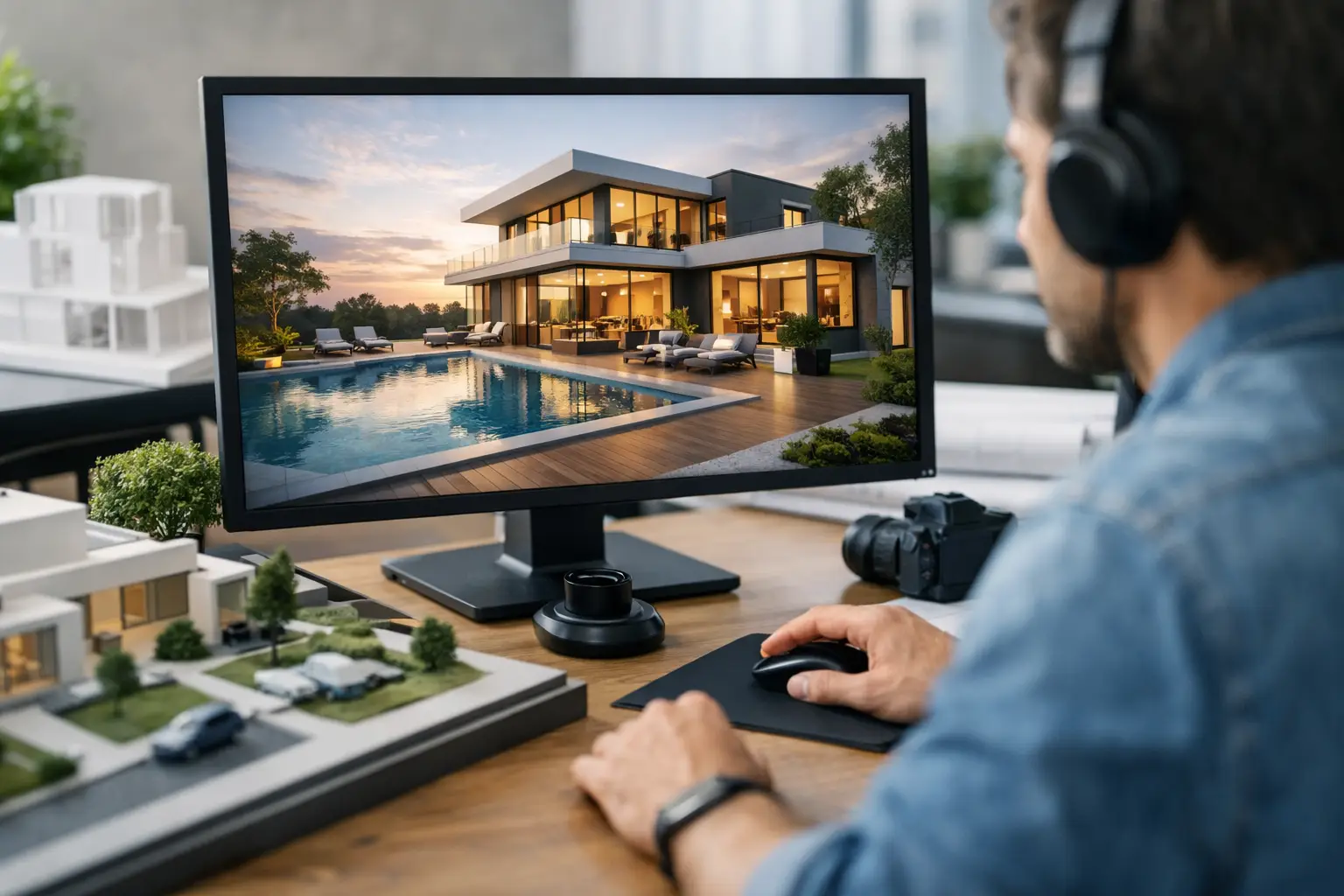
Architectural animation is a crafted sequence of moving CGI images that shows an unbuilt or evolving place in context. It may follow a viewer through a residential entrance, reveal the relationship between a workplace and its surroundings, or use aerial views to establish the scale and connections of a masterplan. Unlike a collection of still visuals, it controls pace, viewpoint and narrative.
That control matters. A well-planned animation can move from the wider location to the arrival experience, then into the spaces that carry most commercial weight. For a housing development, that may mean highlighting kerb appeal, landscaped communal areas and light-filled interiors. For a mixed-use scheme, it may mean explaining access, amenities and the energy of the public realm.
The objective should shape every creative decision. A film aimed at potential purchasers needs warmth, aspiration and a clear sense of lifestyle. A planning or consultation film may need greater emphasis on massing, movement, access and community benefit. An investor presentation may need to communicate confidence, scale and delivery ambition. One piece of animation cannot always do all three jobs equally well, so clarity at the outset protects both the budget and the final result.
Choosing an architectural animation company for commercial impact
The strongest studios combine visual craft with a disciplined production process. Photorealism is essential, but it is not the sole measure of quality. A technically polished film can still underperform if the camera path is unclear, the messaging is generic or the visual style conflicts with the rest of the campaign.
Start by reviewing work that resembles the challenge at hand. Look beyond impressive aerial shots. Does the studio make spaces feel believable at human scale? Are materials, lighting, planting and people considered with restraint? Can they communicate a scheme’s character without relying on effects that may quickly date? Good animation should feel intentional, not simply busy.
It is equally useful to assess whether the partner can work from the information available. Some projects begin with developed architectural models, coordinated plans and a defined materials schedule. Others begin with early-stage drawings and a need to create a compelling vision while details are still being resolved. A capable studio will explain what it needs, identify assumptions early and advise where further information will improve accuracy.
For marketing-led projects, consistency across formats is a major advantage. The animation should not feel separate from the brochure, brand identity, CGI stills, floor plans, social content or sales-suite materials. Working with a team that can deliver CGI visualisation and graphic design together helps maintain a unified visual language, while reducing handovers and the risk of mismatched assets.
Ask how the story will be shaped
A camera route is not yet a story. Ask how the studio will decide what to show first, where to linger and what the viewer should take away. This should be based on the development’s strongest selling points and the intended distribution channel.
A 90-second launch film shown in a presentation has different requirements from a short social edit viewed without sound. Similarly, a film for a large screen in a sales centre can carry more visual detail than a mobile-first version. The best production approach often involves planning a core animation that can be edited into shorter, purpose-built assets rather than treating every output as a separate commission.
Establish who manages feedback and approvals
Animation brings together architectural detail, marketing priorities and creative judgement. Without a clear approval structure, feedback can become fragmented and costly. Agree one main point of contact, a defined review schedule and the people authorised to sign off design, branding and messaging.
Revisions are a normal part of bespoke CGI work, particularly when plans or finishes are still evolving. What matters is that the process is transparent. Your chosen studio should distinguish between refinements to an agreed sequence and major changes to the model, camera route or design direction. This allows everyone to make informed decisions before changes affect programme or cost.
The inputs that make animation more convincing
High-quality animation begins long before rendering. The studio will usually need architectural drawings, elevations, plans, site information, landscape proposals, material references and any available 3D model. Brand guidelines, target audience insight and a clear list of priority features are just as valuable.
Context deserves particular attention. A development does not exist in a blank digital landscape. The surrounding streets, neighbouring buildings, views, transport links and natural features can all influence how credible and useful a film feels. The level of contextual modelling should reflect the purpose of the animation. A broad masterplan view may require a wider but simpler context, while an arrival sequence benefits from close attention to the public realm and immediate setting.
Human activity also needs judgement. People, vehicles and movement can bring scale and atmosphere, but they should support the architecture rather than distract from it. The same applies to weather, time of day and seasonal planting. A golden-hour scene may create aspiration, but it is not automatically right for every scheme. Daylight that reveals the building clearly can be more effective where design clarity is the priority.
Budget, scope and the trade-offs worth discussing
The cost of architectural animation varies because no two films require the same amount of modelling, design development, rendering and post-production. Length is one factor, but it is not the whole story. A short sequence with detailed interiors, bespoke furniture, a complex site and extensive contextual work may require more production time than a longer film using established assets.
The most productive conversation is about priorities. If budget is limited, decide which moments deserve the highest level of detail. It may be better to create a concise, beautifully resolved film focused on the entrance, key amenity and flagship flat than a longer sequence that spreads the investment too thinly.
You should also discuss deliverables from the beginning. Resolution, aspect ratios, music, voice-over, captions, end frames and still-image extracts all affect the final scope. Captions are particularly valuable when animation will be used on social platforms or displayed in environments where sound is unavailable. They should be designed as part of the film, not added as an afterthought.
Affordability should never mean cutting corners that undermine credibility. It should mean using the available budget intelligently: reusing approved models across CGI stills and animation, planning multiple formats together and focusing effort on the visuals that will carry the greatest commercial value.
A production process that protects the programme
A dependable architectural animation company will make the route from brief to delivery clear. After receiving the project information, the team should confirm the required outputs, audience, visual direction and programme. The next stage is often a storyboard, shot list or preview camera route. This is the point to check narrative, composition and the treatment of key spaces before full production begins.
Once the route is approved, modelling, materials, lighting and animation are developed in detail. Preview renders allow the client to assess accuracy and atmosphere before final rendering and post-production. Music, graphics, labels and brand elements are then integrated where required.
This staged approach is not bureaucracy. It prevents expensive late changes and gives marketing and development teams useful visibility throughout production. It also makes deadlines more manageable when a launch date, planning event or sales release cannot move.
At TDR Creative, the value of an integrated approach lies in having CGI and graphic design expertise working as one team. The animation can be planned alongside the wider campaign, helping every asset present the development with the same level of precision and purpose.
Make the film work beyond its first showing
An animation earns its place in the budget when it is built for repeated use. The main film may support a website launch, sales presentation or investor meeting, while shorter edits can introduce a particular flat type, amenity or location benefit. Individual frames can also inform brochures, advertisements and digital campaign materials, provided these uses are agreed within the production scope.
Consider where viewers will encounter it and what they need to know at that moment. A buyer browsing on a mobile phone may need a brief, captioned introduction. A prospective tenant in a meeting may respond to a more immersive walkthrough. A stakeholder audience may need labels or diagrams that make the scheme easier to interpret. The creative treatment should respect that context.
The best animation does not ask viewers to admire the technology. It gives them a clear, credible picture of a place that does not yet exist. When the brief, story and production process are aligned, the result becomes more than a film: it becomes a practical sales and communication asset that continues to support the project long after launch day.
