Home » What Is Exterior CGI Used for in Property Marketing?
What Is Exterior CGI Used for in Property Marketing?
A development can be commercially active long before a single brick is laid. Land may be secured, planning may be progressing and sales teams may need materials for prospective buyers, investors or occupiers. The question, then, is not simply what exterior CGI is used for, but how it can give an unbuilt scheme a credible, compelling presence at the moment decisions are being made.
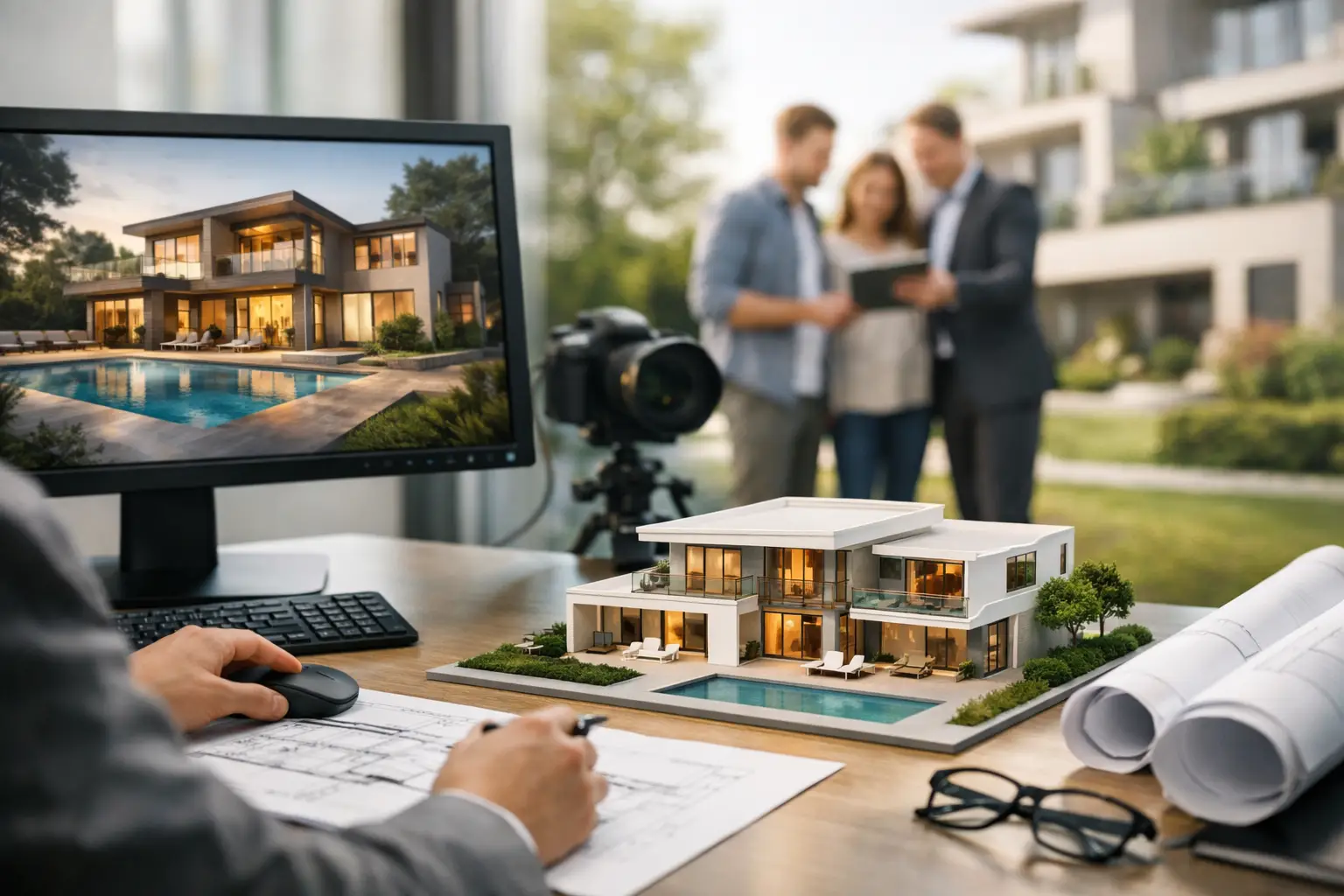
Exterior CGI creates photorealistic visualisations of buildings, streetscapes, landscaping and wider settings before construction is complete. It translates architectural drawings, technical plans and design intent into images that people can understand quickly. For property professionals and marketing teams, that makes it a practical sales, planning and communications tool rather than a purely decorative asset.
What is exterior CGI used for?
Exterior CGI is used to show how a proposed or newly built property will look from the outside. This may include a single house, block of flats, commercial scheme, mixed-use development, retail destination or large masterplan. Depending on the brief, a visual can focus tightly on a building façade or show the relationship between public realm, planting, neighbouring buildings, access routes and surrounding context.
The strongest exterior visualisations do more than replicate elevations. They communicate material quality, scale, atmosphere and use. Warm interior lighting can suggest an active residential setting; carefully considered landscaping can show how a scheme sits within its environment; a chosen camera angle can make an arrival sequence or key architectural feature immediately legible.
This matters because many audiences do not read technical drawings with the confidence of an architect or contractor. A well-produced CGI gives them a clear picture of the proposition, while still being grounded in the approved design information.
Marketing property before it exists
For developers, house builders and estate agents, pre-completion marketing is one of the most common uses of exterior CGI. Sales activity often needs to begin months, sometimes years, before photography is possible. High-quality CGIs provide the hero imagery for brochures, hoardings, sales suites, launch campaigns, presentation decks and property portals.
A visual can help a buyer imagine arriving home, seeing the building from the street or understanding the character of a new neighbourhood. For commercial property, it can help prospective tenants and investors assess the quality of a workplace, retail frontage or mixed-use destination before fit-out and occupation.
The commercial value is not only in having an attractive image. It is in being able to market earlier, present the scheme consistently and give sales conversations something tangible to work from. When exterior CGI is supported by floor plans, site plans, interior imagery and branded collateral, the development reads as a considered, complete offer.
Supporting planning and stakeholder engagement
Planning submissions require accuracy, but they also benefit from clarity. Exterior CGI can be used alongside architectural documentation to illustrate massing, proposed materials, streetscape changes and the visual relationship between a scheme and its surroundings. In the right context, verified views, photomontages and accurate contextual imagery can be particularly useful in showing how a proposal will be experienced from key public viewpoints.
For community consultation, councillor briefings or stakeholder presentations, visual communication can reduce ambiguity. People may have understandable concerns about height, overlooking, traffic, character or the loss of an existing view. A carefully prepared image will not remove every objection, nor should it over-promise, but it can make the discussion more specific and informed.
There is an important distinction here. A marketing CGI can use favourable lighting, active scenes and carefully selected viewpoints to communicate appeal. A planning visual may need a more controlled methodology, with agreed camera locations and a closer relationship to existing conditions. The intended use should be established at the outset so that the output is appropriate, credible and fit for purpose.
Making design intent easier to understand
Architects and design teams use exterior CGI to communicate choices that are difficult to convey through elevations alone. Brick tone, cladding texture, glazing reflectivity, balcony detailing and landscape maturity all influence the perceived quality of a scheme. A visual allows those elements to be reviewed together, in context.
This can be especially valuable where several stakeholders need to align. A developer may be considering the market appeal of materials, a planning consultant may be assessing townscape impact, and a marketing team may be building a campaign narrative. Exterior visuals give each party a shared reference point without replacing the technical information behind the design.
They are also useful when presenting options. Different façade treatments, signage approaches, landscape strategies or lighting conditions can be visualised before a final direction is chosen. This helps decision-makers compare alternatives based on how they will actually read from a street, approach road or neighbouring site, rather than relying on isolated samples or abstract descriptions.
Building confidence with buyers, investors and occupiers
Property decisions carry significant financial weight. Whether someone is reserving a flat, investing in a development or choosing new premises, they need confidence in what they are buying into. Exterior CGI helps create that confidence by presenting a scheme with detail, consistency and a sense of place.
For residential developments, this might mean showing the entrance, landscaped courtyard, street scene or evening arrival. For an office scheme, it could mean illustrating the building’s presence, reception frontage and relationship with transport links or public realm. The image should answer the questions an audience is likely to ask: What will it look like? How will it feel to approach? What distinguishes it from other options?
A compelling visual should remain believable. Overcrowding a scene with people, adding unrealistic views or making materials appear unlike the specification may generate initial attention but can damage trust later. The most effective work balances aspiration with an honest representation of the development’s intended quality.
Creating a consistent campaign across every touchpoint
Exterior CGI rarely works in isolation. One approved hero image can inform a wider set of campaign assets, including brochure covers, digital advertisements, display boards, social content, email campaigns, sales-suite graphics and press materials. Additional camera angles can then create a coherent visual story, from the broad masterplan to the detail that makes a particular plot or building memorable.
This is where integrated creative support has a clear advantage. CGI artists, graphic designers and marketing teams need to work from the same architectural information, brand direction and campaign priorities. If the imagery and printed materials are developed separately, small inconsistencies in tone, material references, messaging or layout can make a premium scheme feel less considered.
At TDR Creative, exterior CGI can sit alongside interior visualisation, animation, virtual staging, floor plans and brochure design, allowing one studio team to maintain visual consistency from the first concept through to final campaign delivery.
What makes an exterior CGI effective?
The quality of an exterior CGI depends on more than rendering skill. It starts with a clear brief: who is the image for, where will it appear and what must it communicate? A planning-focused view, for example, may need to prioritise context and accuracy, while a launch visual may need a stronger lifestyle narrative and a more distinctive composition.
Accurate source material is equally important. Architectural plans, elevations, material schedules, landscape proposals, site photography and reference imagery all contribute to a reliable result. Missing information does not make a project impossible, but it introduces assumptions that should be discussed early. The earlier the creative team is involved, the more efficiently it can identify gaps and recommend the right visual approach.
There are trade-offs around budget and programme too. A single high-impact image may be the right choice for a focused campaign, while a large development may require multiple views, aerial perspectives, phased imagery and animation. The aim should not be to commission visuals for their own sake. It is to create the set of assets that will help the project move forward commercially and communicate with confidence.
Choosing the right brief for your scheme
Before commissioning exterior CGI, decide what success looks like. If the immediate priority is early sales, focus on the views that best express the lifestyle, architecture and strongest selling points. If the priority is planning engagement, establish the required viewpoints, context and technical standards before creative production begins. If a campaign is being built across print and digital channels, consider the full asset list rather than treating each item as a separate task.
The best exterior CGI gives a project a visible future that people can understand, assess and act on. With the right level of accuracy, art direction and marketing purpose, it can turn a set of plans into a proposition that carries weight well before completion.
