Home » Can CGI Show Material Options Before You Build?
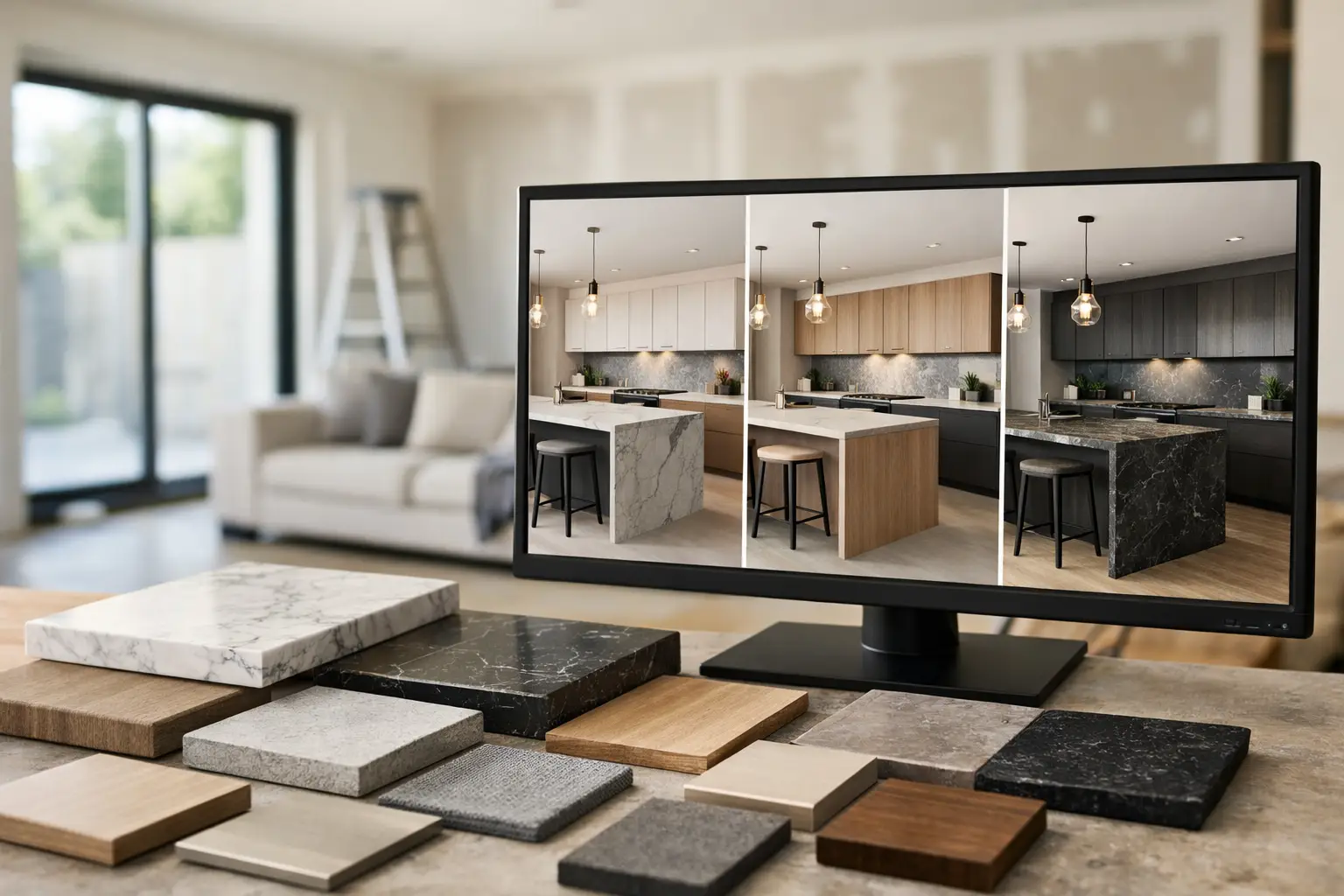
Can CGI Show Material Options Before You Build?
A brick sample on a board can tell you its colour. It cannot show how that brick reads across a four-storey façade at dusk, beside charcoal window frames, in the context of its neighbouring buildings. That is where the question, “can CGI show material options?”, becomes commercially useful rather than simply technical. When produced with care, CGI gives project teams a credible way to compare finishes before committing to procurement, construction or campaign artwork.
For developers, architects, house builders and product brands, material decisions affect more than appearance. They influence planning presentations, buyer confidence, perceived quality, maintenance expectations and the consistency of every marketing asset that follows. Photorealistic visualisation brings those decisions into view early enough to be useful.
Can CGI show material options accurately?
Yes, but accuracy depends on the quality of the brief, the material references supplied and the skill of the CGI team. CGI is not a substitute for physical samples, technical specifications or manufacturer approval. It is a highly effective visual decision-making tool that helps people understand how specified materials will work together in a real-world setting.
A strong CGI artist does not simply apply a flat image of timber, stone or fabric to a model. They build the material to reflect its physical behaviour. That includes surface texture, scale, roughness, reflectivity, variation between panels or units, edge detail and the way light responds to it. The result should feel convincing because it is based on how the material actually performs, not because it has been made artificially glossy or dramatic.
This distinction matters. A polished porcelain tile, for example, may look refined in a bathroom visual, but its reflective qualities must be controlled so it does not resemble glass. Similarly, timber cladding needs believable grain direction, tonal variation and board spacing. Brickwork requires the correct bond, mortar tone, joint profile and a sensible level of natural variation. These details are often what make a visual feel either trustworthy or generic.
What material options can CGI compare?
CGI can compare a broad range of interior, exterior and product finishes. In property marketing, this might mean showing alternative brick blends, render colours, cladding systems, roofing materials, windows, paving, landscaping and metalwork. For interiors, the same approach can be applied to flooring, kitchen doors, worktops, tiles, sanitaryware, wall colours, upholstery and lighting finishes.
For consumer brands, product CGI can demonstrate variations in packaging substrates, labels, metallic elements, plastics, painted finishes, textiles and component colours. A single approved model can become the foundation for multiple product configurations, helping teams assess ranges without arranging repeated photography or producing every physical prototype.
The real benefit is context. A material is never seen in isolation once a project is built or a product reaches the shelf. CGI can show how a warm-toned brick sits against dark aluminium, how brushed brass works under warm interior lighting, or whether a pale worktop still creates sufficient contrast with surrounding cabinetry. It can also test whether a proposed finish supports the intended market position – premium, contemporary, heritage-led, family-focused or design-forward.
Why context changes the decision
Material samples remain essential, particularly where colour matching, tactile quality, durability and compliance are concerned. However, samples are limited by their size and the conditions in which they are reviewed. A small tile held under office lighting may look very different once installed across a large reception area with daylight entering from two sides.
CGI gives decision-makers a fuller picture. Exterior visualisations can show the same scheme in bright sun, overcast conditions or evening light. Interior views can demonstrate daylight, feature lighting and practical room lighting. This does not mean every possible condition needs to be rendered. It means the chosen views should answer the questions people are likely to ask before approving a direction.
For a residential development, that might include whether the façade palette gives each house type a clear identity while remaining coherent across the street scene. For a hospitality interior, it may be whether the materials still feel considered and welcoming once tables, seating, signage and ambient lighting are introduced. For a product launch, it could be whether several colourways look like a deliberate family rather than disconnected variants.
A better way to use material-option CGI
The most effective projects begin with a clear purpose. Are the visuals needed to support an internal design decision, a planning submission, sales and marketing, or a buyer choice process? The answer shapes the level of detail, number of options and camera angles required.
For internal review, a small selection of controlled comparison images can be more useful than a large set of highly styled visuals. Keeping the camera position, lighting and surrounding elements consistent makes it easier to judge the material change itself. If every image uses a different angle or time of day, stakeholders may be reacting to the mood of the image rather than the finish being tested.
For marketing, the objective is different. Once a material direction has been approved, the visual needs to communicate aspiration as well as accuracy. It should show the project at its best while remaining faithful to the specification. This is where a coordinated approach becomes valuable: the same approved CGI can inform brochures, site plans, digital campaigns, sales collateral, signage and presentation materials without visual inconsistencies appearing between suppliers.
At TDR Creative, CGI visualisation and graphic design are handled within one studio process, allowing material decisions to carry through from architectural imagery into the wider campaign with greater control.
The information that produces better results
The quality of the output is closely tied to the inputs. A manufacturer specification, technical data sheet or confirmed product reference gives the CGI team a far stronger starting point than a general description such as “light oak” or “dark grey cladding”. Where possible, physical samples and high-resolution photographs can help establish colour, grain, texture and sheen.
Scale is equally important. A stone texture may look plausible close up but appear wrong when repeated across a larger elevation. Repeating patterns in tiles, timber boards and brickwork need careful management so they do not look digitally copied. Details such as grout lines, shadow gaps, fixings, thresholds and junctions should be considered where they are visible from the selected viewpoint.
It is also useful to state what is fixed and what remains open to discussion. If the façade material is confirmed but window-frame colour is under review, that should be clear at the outset. It prevents time being spent perfecting alternatives that are not genuinely being considered and keeps approval rounds focused.
Where CGI has limits
CGI can show likely visual outcomes, but it should not be presented as an exact contractual representation of every finished surface. Manufacturing batches vary. Natural materials vary even more. Weather, installation methods, surrounding colours and ageing will all influence the final appearance.
This is particularly relevant for brick, timber, natural stone, concrete and metallic finishes. A visual can capture an intended range and character, but it cannot guarantee the precise variation in every installed piece. The responsible approach is to use CGI alongside samples, mock-ups and technical sign-off, rather than positioning it as the sole basis for a material approval.
There is a further trade-off between speed and detail. Early-stage schemes may only need indicative materials to test a concept or secure stakeholder alignment. Producing every fine detail before the design is settled can add cost without adding value. Conversely, a sales visual created after key decisions are made should be developed with greater precision, because buyers and investors will naturally inspect it more closely.
From material decision to stronger marketing
Material-option CGI reduces uncertainty when plans, samples and technical language are not enough for a stakeholder to picture the outcome. It helps design teams explain intent, gives marketing teams approved visual assets earlier, and allows decision-makers to spot clashes before they become expensive changes on site.
The best results come from treating CGI as part of the project process, not a final decorative layer. Bring visualisation in while there is still room to compare, refine and make informed choices. A well-built image does more than show a finish – it gives everyone involved a clearer basis for deciding what the finished project should feel like.
