Home » CGI Compositing for Better Property Marketing
CGI Compositing for Better Property Marketing
A finished CGI render can be technically excellent and still fail to persuade. The light may feel too clean, the landscaping too uniform, or the building may sit apart from its surroundings rather than belonging within them. CGI compositing is the stage that resolves those details, bringing 3D visualisation, photography, atmosphere and brand requirements into one credible final image.
For property developers, architects, estate agents and marketing teams, that difference is commercial. Buyers and investors need to understand not only what a development will look like, but what it will feel like to arrive there, live there or visit it. A well-composed image turns a planned scheme into a place people can picture themselves using.
What CGI compositing adds to a visual
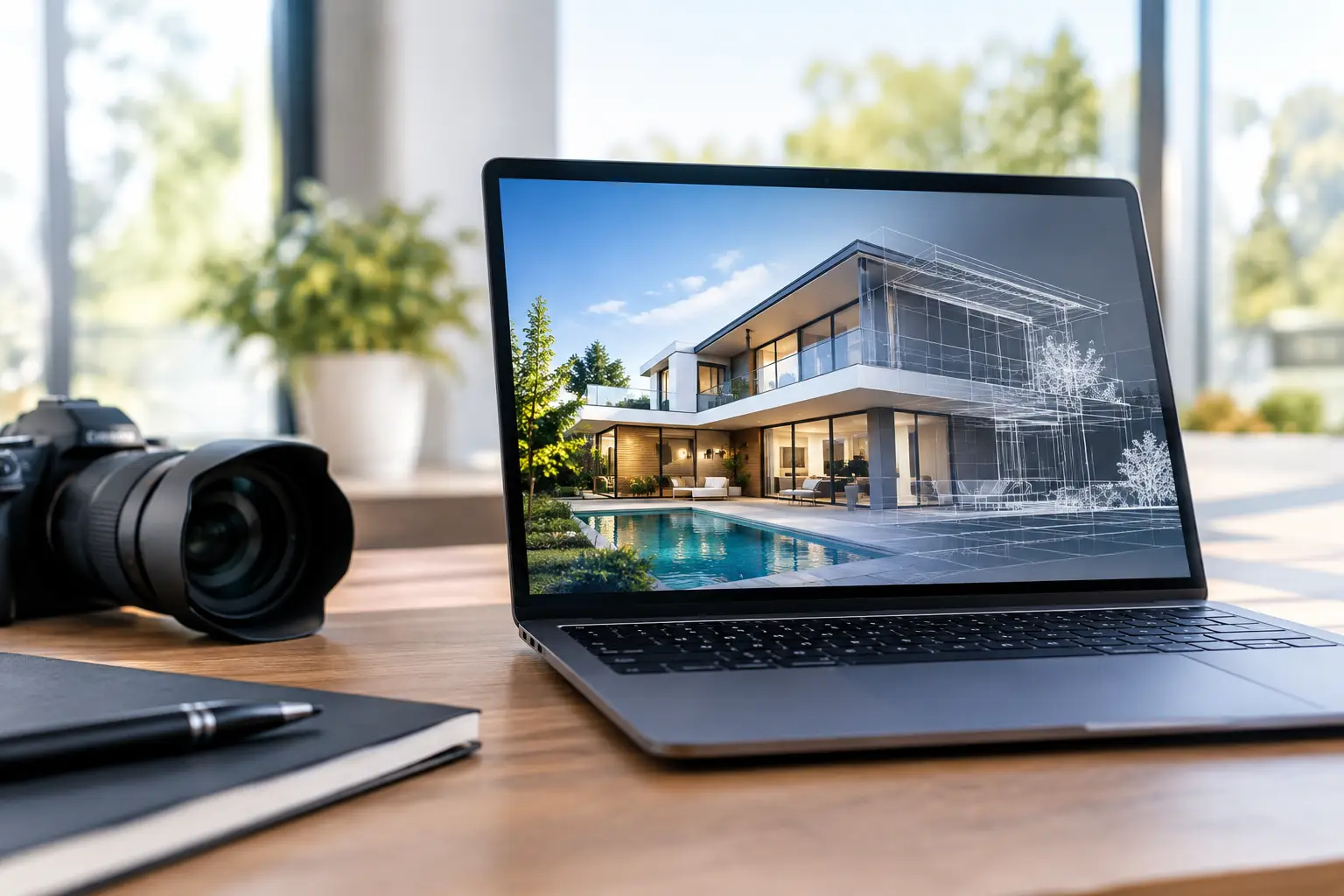
CGI compositing is the process of combining rendered 3D elements with other visual assets, then refining them into a single final image. Those assets may include a photographed site, a carefully selected sky, people, vehicles, planting, signage, interior styling and brand-led graphic elements.
It is sometimes mistaken for a simple final polish. In practice, compositing has a major influence on realism, mood and clarity. It controls how every element works together: the direction of sunlight, reflected colour in glazing, the density of planting, the relationship between the proposed building and neighbouring streetscape, and the amount of activity shown in the scene.
The purpose is not to make an image busy. It is to make it believable and useful. A residential development may need to feel welcoming and established, while a commercial scheme may need to communicate access, scale and a confident business environment. The right approach depends on the audience and the marketing objective.
From accurate model to convincing scene
A 3D model provides the foundation. It defines the architecture, materials, geometry and viewpoint with precision. However, even the most detailed model cannot automatically account for the visual complexity of a real location.
Compositing gives the image context. It can place a proposed building into a site photograph, retain recognisable local features and introduce realistic environmental variation. Subtle details matter: imperfect paving, changing foliage, distant traffic, softer cloud cover or the slight haze that affects a long view across a cityscape.
These adjustments should support the design rather than distract from it. If the eye is drawn first to an oversized tree, an implausible reflection or a crowd of stock figures, the image has lost focus. Strong compositing directs attention towards the architecture and the value of the scheme.
CGI compositing for property marketing
For off-plan marketing, visual certainty is often needed before construction is complete. A buyer may be asked to commit based on plans, specifications and a limited understanding of the finished setting. High-quality compositing helps bridge that gap by showing the proposal in a credible, aspirational and recognisable context.
A streetscape image might show how new homes sit alongside existing buildings. An aerial view can clarify access routes, open space and the relationship to transport or local amenities. An interior visual can combine the accuracy of a room render with the warmth of considered styling, natural light and details that reflect the intended purchaser.
This is especially valuable where one image must work hard across several formats. The same hero visual may appear on a brochure cover, a development website, sales-suite display, hoarding, social campaign and presentation deck. Planning the composition with those applications in mind avoids a common problem: a striking image that crops poorly, leaves no room for messaging or loses impact at smaller sizes.
At TDR Creative, CGI production and graphic design can be considered together from the outset. That means visual hierarchy, logo placement, typography, campaign colours and print requirements do not become last-minute additions to an otherwise finished render. The result is more consistent marketing material and a more efficient approval process.
The balance between aspiration and accuracy
Property imagery should be attractive, but it must also be responsible. A visual should communicate the intended quality of a development without making claims that the specification, planning position or surrounding context cannot support.
That is why source material and client input matter. Architects’ drawings, material schedules, landscape proposals, planning information, site photography and brand guidelines all help establish what should be shown and how it should be represented. Where certain features remain subject to change, a considered image strategy can focus on confirmed aspects of the proposal rather than overcommitting to incidental detail.
There is also a judgement call around retouching the setting. Removing visual clutter can make a proposal easier to read, but stripping out every neighbouring building, utility feature or sign of everyday life may make the result less credible. The strongest images improve readability while retaining enough of the real location to build trust.
How the compositing process works
Effective CGI compositing begins before the final render is produced. The team needs to agree the view, the target audience, the level of realism and where the image will be used. A planning visual, for example, may demand a restrained and verifiable treatment, whereas a sales image can take a more lifestyle-led approach.
Site photography is then captured or supplied at the required viewpoint. Camera height, lens characteristics, weather conditions and time of day all affect how convincingly the CGI can be integrated. If the photograph and render have incompatible perspectives, the finished image will feel wrong even when individual elements are well made.
The 3D scene is matched to the photographic conditions. This includes camera alignment, sunlight direction, exposure, shadows and the visual behaviour of materials. Glass, metal, brick, water and planting all react differently to light, so a single overall colour adjustment is rarely enough.
During compositing, the image is built in layers. The background, architecture, foreground, people, landscaping and atmospheric elements can be adjusted independently, allowing the team to refine the scene without compromising the accuracy of the building. Colour grading brings these layers into a shared visual language, while carefully placed shadows, reflections and contact points help establish scale and physical presence.
Review stages are not merely an opportunity to choose a preferred sky. They are where commercial priorities can be tested. Does the main entrance read clearly? Is the balcony detail visible at brochure size? Does the composition leave usable space for a headline? Does the scene reflect the likely buyer or occupier? Clear feedback at this stage protects both quality and delivery timescales.
Where compositing makes the biggest difference
The technique is valuable across a wide range of visual work, but its role changes with the brief. In exterior architectural CGI, it often establishes the connection between the future building and the existing site. In interiors, it is more concerned with atmosphere, texture and lifestyle cues. For product visuals, it can place an item in a controlled environment that reinforces the brand without the cost or limitations of a physical shoot.
It is also useful when a full CGI approach is unnecessary. A photographed interior can be virtually staged with furniture, lighting and accessories. An existing building can be enhanced to show proposed signage, cladding or landscaping. A campaign can combine product CGI with graphic devices that would be difficult to create practically.
The trade-off is that compositing is not a substitute for a clear brief or accurate base material. It cannot reliably rescue incomplete design information, poorly chosen viewpoints or an uncertain marketing proposition. The earlier visual strategy is considered, the more focused and cost-effective the final production will be.
Choosing the right level of detail
More detail is not always better. A planning submission may require restrained figures, factual material representation and close alignment with the verified view. A premium residential launch may call for richer landscaping, warmer lighting and a more curated sense of life. A commercial brochure may prioritise clear wayfinding, loading access or façade scale over lifestyle activity.
The most effective decision is to match the image to its job. Establish what the viewer needs to understand in the first few seconds, then use composition to make that message immediate. Everything else should support it.
A well-composited visual earns attention because it feels considered rather than manufactured. When architecture, setting and brand presentation are developed as one, the image gives audiences a clearer reason to believe in what is being proposed – and a stronger reason to take the next step.
