Home » Exterior CGI for Property Marketing That Performs
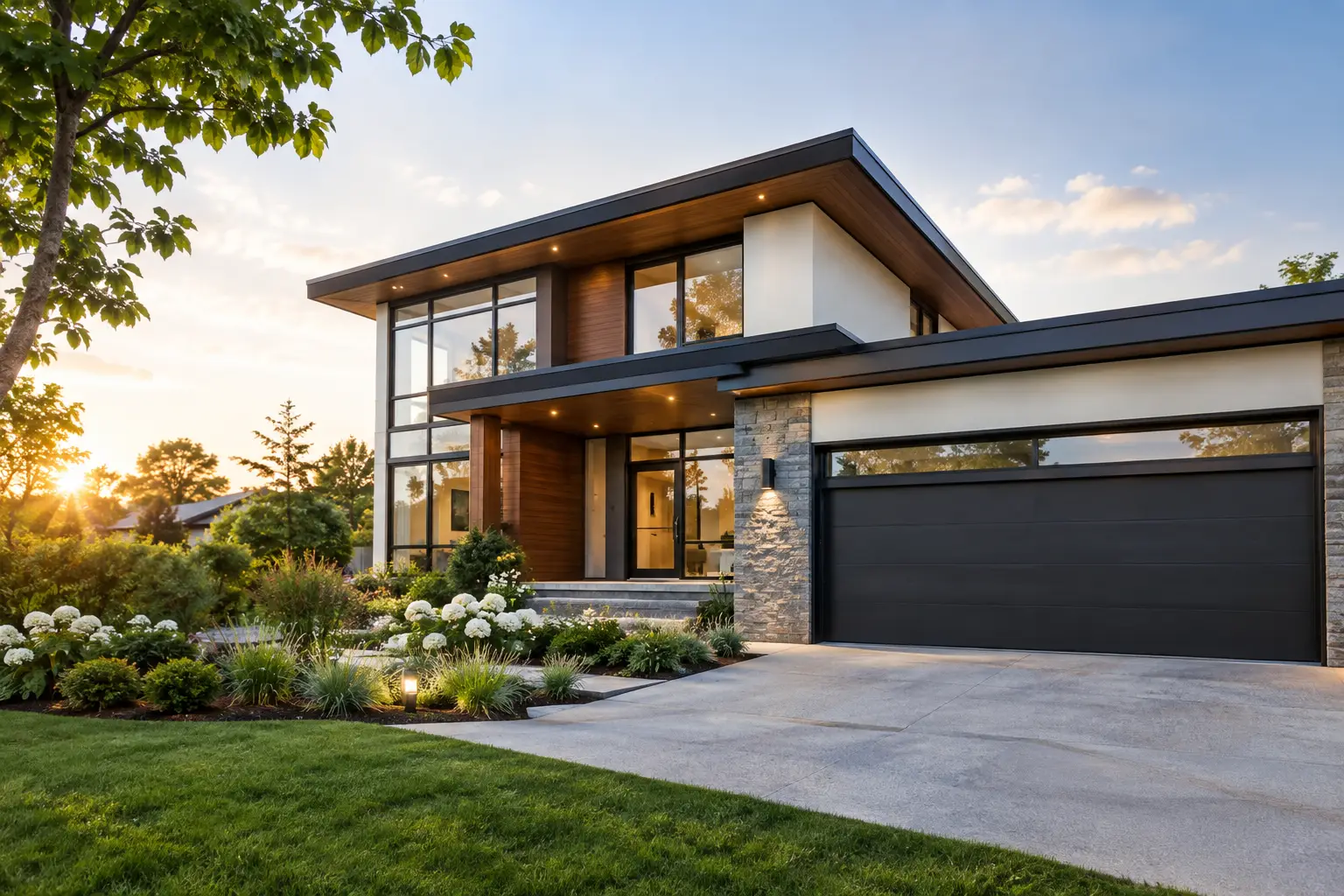
Exterior CGI for Property Marketing That Performs
A planning board, a set of elevations and a site plan can explain a development to those who work in property every day. They do far less for a prospective buyer, investor or stakeholder trying to understand what will actually stand on the site. Exterior CGI closes that gap, turning technical intent into a convincing visual proposition before construction is complete.
For developers, architects and marketing teams, the objective is not simply to create an attractive image. It is to show the right scheme, in the right context, with enough clarity to support a sales conversation, secure internal approval or build confidence in a launch campaign. That calls for disciplined visual craft as much as creative judgement.
What exterior CGI needs to achieve
Exterior CGI is a photorealistic visualisation of a building, development or external space. It can show a single home, a mixed-use scheme, a housing development, commercial premises or a public-facing destination. However, realism alone is not the measure of success. The image must also communicate the features that matter to its intended audience.
For a house builder, that might mean demonstrating kerb appeal, plot positioning and the relationship between homes. For an architect, it may be the material palette, massing and response to the surrounding streetscape. For a marketing team, the priority could be a strong hero image that gives brochures, campaigns and sales materials a recognisable focal point.
The most effective visuals balance these requirements. They are accurate enough to represent the scheme responsibly, but composed with a clear understanding of how people read an image. A poorly chosen viewpoint can make an entrance feel secondary, conceal valuable amenity space or flatten the relationship between buildings. A considered one makes the development easier to understand at a glance.
Start with the commercial question, not the camera angle
Before an exterior visual is commissioned, it helps to define what the image needs to do. This avoids a common problem: producing a technically polished render that does not answer the viewer’s main question.
A launch image may need to establish the scale and character of the whole development. A plot-specific visual may need to help buyers compare house types. A planning or consultation image may require a more contextual viewpoint that shows neighbouring buildings, roads, landscaping and access. These are different briefs, and they should not be treated as variations of the same shot.
At TDR Creative, the strongest starting point is a practical conversation around audience, channel and decision point. Where will the image appear? What should the viewer notice first? Which design details are fixed, and which elements are still being developed? Establishing this early keeps the visual direction focused and reduces unnecessary revisions later in the process.
It also helps to consider the wider campaign. If the CGI will sit alongside floor plans, site plans, sales brochures, hoarding or brand assets, the visual should be developed as part of a coordinated presentation. Consistency in typography, colour treatment, messaging and overall tone gives a scheme greater authority than a collection of separately commissioned materials.
The information behind a credible image
High-quality exterior CGI depends on the source material being clear enough to model and present the proposed scheme accurately. Architectural drawings are the foundation, but the quality of the final result is often determined by the detail supplied around them.
Plans, elevations, sections and material schedules help establish geometry and finish. A site plan clarifies orientation, boundaries, levels, parking, access routes and landscaping. Reference photography is equally valuable, particularly where the development sits within an established street or has distinctive views, neighbouring properties or mature planting that should be represented with care.
Materials deserve close attention
Brick, stone, timber, metalwork and glazing all respond differently to light. Their character is not just a matter of colour. Scale, texture, reflectivity, joints, edge details and weathering each influence whether a façade feels believable.
This is where generic assumptions can undermine an otherwise strong visual. A brick selection may appear too uniform, glazing may look overly reflective, or a roof finish may not carry the depth visible in reality. Clear product references and samples enable the CGI team to make informed decisions rather than approximations.
Context is part of the design story
A proposed building rarely needs to be viewed in isolation. Road widths, footpaths, boundary treatments, street furniture, trees and adjacent architecture all shape how a scheme is perceived. Contextual modelling should therefore be proportionate to the use of the image.
For a close sales visual, the immediate setting may be sufficient. For a wider planning, investment or placemaking presentation, the surrounding environment carries more weight. The right level of detail depends on the message, not on adding visual complexity for its own sake.
Choosing viewpoints that make a development easier to understand
A strong exterior CGI begins with a viewpoint selected for a reason. Eye-level views are often effective for residential marketing because they feel approachable and place the viewer at street level. They can show the entrance, landscaping and frontage in a way that mirrors a real arrival experience.
Elevated views can be useful where site layout, shared spaces or the relationship between phases need to be understood. They are particularly valuable for larger developments, but they should still feel credible. If the camera is too high or too distant, the visual can become diagrammatic and lose the sense of place that encourages engagement.
Corner perspectives are often chosen because they reveal two elevations and give a building depth. Yet they are not automatically the best option. A direct frontal view may better communicate a symmetrical façade, while a view from an approach road can be more persuasive if it reflects how future visitors will first encounter the scheme.
Light also shapes the message. Bright daylight can make materials and layout easy to read. A softer, warmer setting may create atmosphere and bring out architectural depth. Neither is universally better. The appropriate choice depends on whether the priority is factual clarity, aspirational appeal or a balanced combination of both.
Accuracy and aspiration must work together
Property marketing relies on confidence. An exterior CGI should present a proposed scheme at its best, but it should not invent qualities that the design cannot support. Overstating views, changing proportions, introducing unrealistic landscaping or implying features that are not part of the specification may create short-term impact while weakening trust later.
That does not mean visuals need to feel sterile. Carefully selected planting, people, vehicles and environmental detail can bring scale and life to an image. The key is relevance. A family-focused housing development may benefit from an active but natural streetscape, while a premium commercial scheme may call for a more restrained composition that puts architecture and materials first.
The same principle applies to seasonal cues. Lush greenery and clear skies can be effective, but they should support the intended brand position rather than distract from the building. Good visualisation makes considered choices about what to include, what to soften and what to leave out.
A joined-up process protects quality and deadlines
Exterior CGI is most efficient when visual decisions are managed through a clear review process. The first stage should confirm the model, camera angle, broad setting and key design information. Later feedback can then concentrate on materials, landscaping, signage, lighting and finer details, rather than reopening fundamental decisions.
One consolidated set of comments from the client team is particularly valuable. It prevents conflicting instructions and gives everyone a shared record of the agreed direction. Where a project involves architects, developers, sales teams and brand stakeholders, this structure keeps approval moving without compromising attention to detail.
It is also worth identifying which details are non-negotiable. Building form, window proportions, cladding zones, rooflines, access arrangements and branded elements often need close scrutiny. Other elements, such as background activity or secondary planting, may allow more creative discretion. Being clear about that distinction helps the CGI team focus effort where it will have the greatest commercial value.
Extending the value across marketing materials
A well-produced exterior visual should not exist as a standalone asset. Its composition, mood and architectural cues can inform the visual language of the wider campaign. The same development can be carried through sales brochures, site boards, digital adverts, presentation decks and supporting graphic design with a consistent look and feel.
This joined-up approach is especially useful where developments have multiple house types, phases or buyer audiences. Rather than making each item look unrelated, a coordinated studio can maintain shared standards for image treatment, typography, colour and messaging. The result feels more considered to prospective purchasers and more manageable for internal teams.
The asset requirements should be discussed early. A visual created for a landscape brochure spread may need different framing from one intended for a portrait social placement or a large-format board. Cropping can solve some issues, but not all. Planning for practical formats protects the integrity of the image wherever it appears.
When exterior CGI makes the greatest difference
Exterior CGI is particularly valuable when a physical site cannot yet tell the story. This includes pre-construction marketing, phased developments, regeneration schemes, off-plan sales and proposals where the finished architectural character needs to be communicated to non-technical audiences.
It is also effective when existing photography is limiting. A location may be inaccessible, unfinished, cluttered by construction work or difficult to photograph from the most useful angle. Visualisation provides control over the viewpoint and conditions while keeping the focus on the future scheme.
The best results come from treating exterior CGI as a communication tool rather than a decorative final step. Give it a clear job, provide the right information and connect it to the wider marketing plan. The finished image will do more than show what is being built – it will give people a credible reason to picture themselves there.
