Home » How Brochure Design Supports Property Launches
How Brochure Design Supports Property Launches
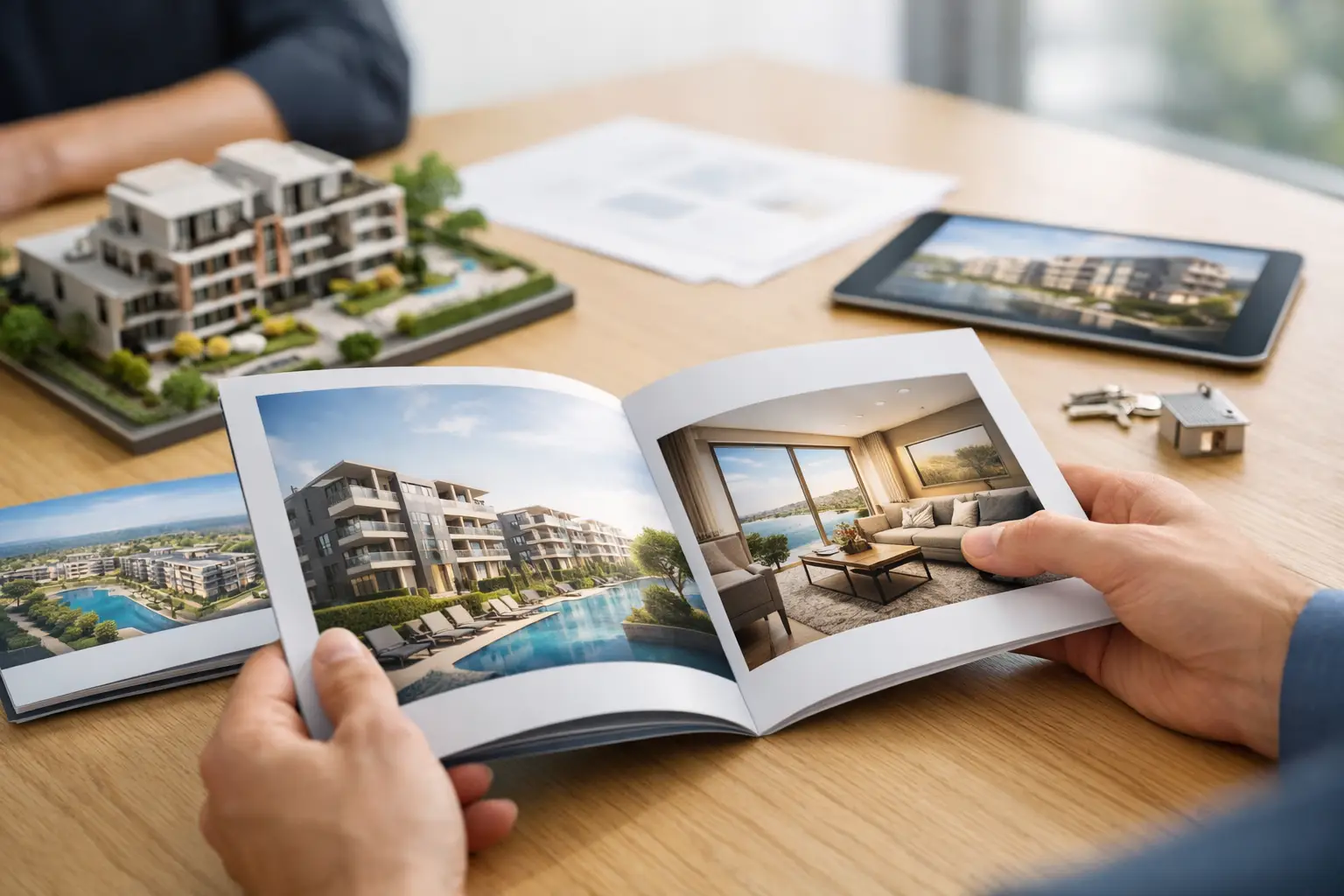
A property launch often begins while the development is still a construction site, a planning drawing or an empty shell. That gap between what exists and what buyers need to picture is precisely how brochure design supports property launches. It brings plans, specifications, CGI and the wider brand together in one considered sales tool, giving prospective buyers a credible sense of place before they can walk through the front door.
For developers, house builders and agents, the brochure is not simply printed collateral to place in a sales suite. It is a practical part of the launch strategy. It must communicate the development’s value quickly, stand up to closer scrutiny and give sales teams a confident, consistent way to present the offer.
Why property brochures still earn their place
Buyers may start their search online, but major property decisions are rarely made from a single screen view. A well-designed brochure gives people something more deliberate to spend time with. They can compare house types, revisit details with a partner and refer back to the information once the first viewing or sales conversation is over.
That physical and downloadable asset is particularly valuable for off-plan launches. Where there is no finished kitchen, landscaped courtyard or show home available, the brochure turns technical information into a persuasive, easy-to-understand narrative. It helps a buyer move from “I understand the location” to “I can see myself living here”.
Its value is also operational. A properly structured brochure reduces avoidable variation in how a development is presented. Every sales adviser, estate agent and marketing partner works from the same approved imagery, wording, plans and specification. That protects the brand while helping the sales process move more efficiently.
How brochure design supports property launches before completion
The strongest property brochures do not attempt to say everything at once. They lead buyers through the decision in the order that makes sense: the development’s setting and character, the homes themselves, the lifestyle on offer, then the practical detail needed to enquire with confidence.
It turns an idea into a believable place
CGI is often the visual foundation of a pre-completion campaign. Exterior visualisations establish architectural character, materials and arrival experience. Interior CGI shows how light, layout and finishes work together. A brochure gives these images context, pairing them with considered copy, key views, floor plans and the development story.
The difference matters. A striking CGI on its own can attract attention, but it cannot always explain why a particular home works for its intended buyer. Through page sequence, scale and supporting information, brochure design helps each visual do a defined job. A hero image can set the tone; a close interior view can demonstrate quality; a site plan can make the choice of plot feel tangible.
Accuracy is essential. Visuals should reflect the approved architecture, landscape proposals and available specification, with clear qualifications where details remain subject to change. Overpromising may create initial interest, but it can undermine trust later. Good design balances aspiration with clarity.
It gives the development a distinct market position
New homes compete on more than postcode and bedroom count. Buyers are assessing quality, identity, convenience and whether the development feels right for their next stage of life. Brochure design translates a project’s positioning into a visual language that feels intentional from the first page.
For a premium city-centre scheme, that may mean editorial layouts, restrained typography and carefully art-directed interiors. For a family-focused development, it may call for warmer imagery, clearer practical information and stronger emphasis on schools, green space and everyday living. Neither approach is automatically better. It depends on the audience, price point, location and brand promise.
Colour, paper stock, format and finishing all contribute to that perception in print. A high-spec brochure can reinforce quality, but lavish production is not always the commercial answer. If a development has a broad buyer audience, frequent plot releases or evolving availability, a flexible format and digital-first version may offer better value. The aim is not extravagance. It is a presentation that matches the proposition and supports the sales plan.
It makes complex information easier to use
Property marketing involves a considerable amount of detail: plot numbers, tenure, dimensions, parking, amenity space, specifications, reservation information and local connections. Buyers need enough information to feel assured, but not so much that the brochure becomes difficult to navigate.
This is where graphic design earns its place. Clear typographic hierarchy, generous spacing and consistent page grids make important content easier to find. Floor plans need room to breathe and should be reproduced at a legible scale. Site plans should make orientation obvious rather than becoming dense diagrams that require a sales adviser to decode.
The same principle applies to the specification. It should be specific enough to demonstrate quality and avoid vague claims, while remaining easy to scan. Well-organised sections help buyers distinguish between standard finishes, optional upgrades and communal features. That clarity supports better conversations and can reduce later misunderstandings.
A brochure should work across the full launch campaign
A brochure is most effective when it is designed as part of a coordinated set of launch materials, not as a separate print job created at the end. The visual system should carry into the development identity, hoarding, sales-suite graphics, email campaigns, social assets, brochures for individual house types and presentation materials.
This consistency is especially valuable when marketing begins early. A prospective buyer might first encounter a CGI in an advert, then request the digital brochure, visit a sales suite and later receive a plot-specific pack. The development should feel recognisable at every point. Repeated visual cues build familiarity, while consistent facts prevent uncertainty.
Studios that combine CGI and graphic design can offer a practical advantage here. Rather than passing visual assets between separate suppliers, the imagery, layouts and production files can be shaped by one team with a shared understanding of the campaign. At TDR Creative, this joined-up approach helps maintain visual accuracy and gives clients a clearer route from initial concept to final brochure and supporting launch assets.
What a launch-ready brochure needs to include
The exact content depends on the scheme, but a useful brochure usually answers the questions buyers ask before they commit to an appointment. It should establish where the development is, what makes it desirable and what homes are available. It should then provide enough practical information for buyers to shortlist a plot or house type.
A strong structure often begins with the development story and location, followed by key CGI imagery and the range of homes. Floor plans, site plans and specifications then provide the detail. Local lifestyle information can be highly persuasive, but it must be relevant. A long list of distant attractions adds little; realistic journey times, nearby green space, transport options and useful amenities add more.
Contact details and a clear next step should be easy to locate, particularly in the digital PDF. Yet the close should not feel overly forceful. For high-consideration purchases, the best prompt is often an invitation to view, register interest or speak with the sales team, supported by the information needed to make that step feel worthwhile.
Designing for print and digital use
Print remains valuable at launches, viewings and events because it creates a more focused moment of consideration. Buyers can turn pages, compare options and take the document away. Digital distribution, meanwhile, makes the brochure available immediately to registered leads and supports wider campaign activity.
Designing one file for both uses without adjustment can create compromises. A print brochure may benefit from tactile finishes, larger images and a carefully chosen binding. A digital version needs sensible file size, readable text on smaller screens and navigation that works without physical pages. In some cases, an interactive PDF or separate plot sheets will help sales teams respond more quickly to specific enquiries.
Version control is equally important. Pricing, availability and incentives can change rapidly during a launch. The brochure should be planned with this in mind, so that information likely to change is not unnecessarily embedded in expensive, long-run printed stock. Modular inserts, separate price lists or digital updates can protect both budgets and accuracy.
Measure the brochure by sales usefulness, not appearance alone
A polished brochure should look impressive, but its real test is whether it helps people progress. Sales teams can provide useful feedback: which pages buyers refer to, which questions keep recurring and whether floor plans or specifications are causing confusion. Marketing teams can also track requests for the downloadable version, appointment bookings and the quality of leads generated after distribution.
Not every result can be attributed to one document, of course. Property sales are influenced by price, timing, mortgage conditions, location and the development itself. But a brochure that gives buyers clear reasons to enquire, supports a consistent sales conversation and reflects the quality of the scheme is doing meaningful commercial work.
The most useful way to approach brochure design is to treat it as an early launch decision, not a final marketing task. Bring the brand, CGI, plans and sales priorities together while there is still time to shape the story properly. The result is a piece of collateral that helps buyers see the opportunity clearly – and gives your sales team a stronger starting point for every conversation.
