Home » Uncategorized » Page 3
CGI Render Versus 3D Model: What Clients Need
A proposed kitchen may look complete in a brochure long before a single cabinet has been fitted. That is where the distinction between a CGI render versus 3D model matters. They are closely connected, but they are not interchangeable deliverables. Understanding the difference helps property, architecture and marketing teams brief more accurately, compare quotations fairly and invest in visuals that genuinely support a campaign.
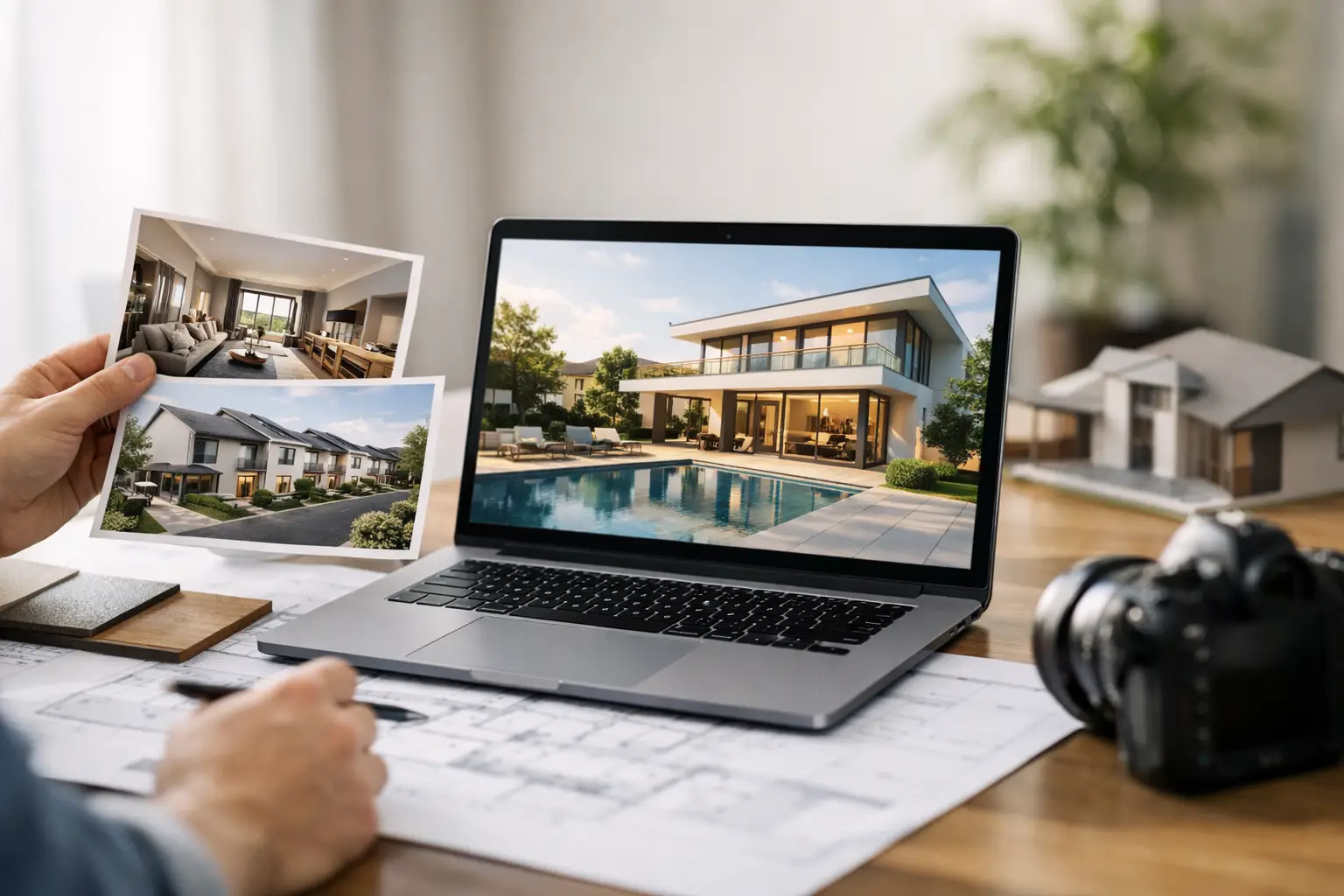
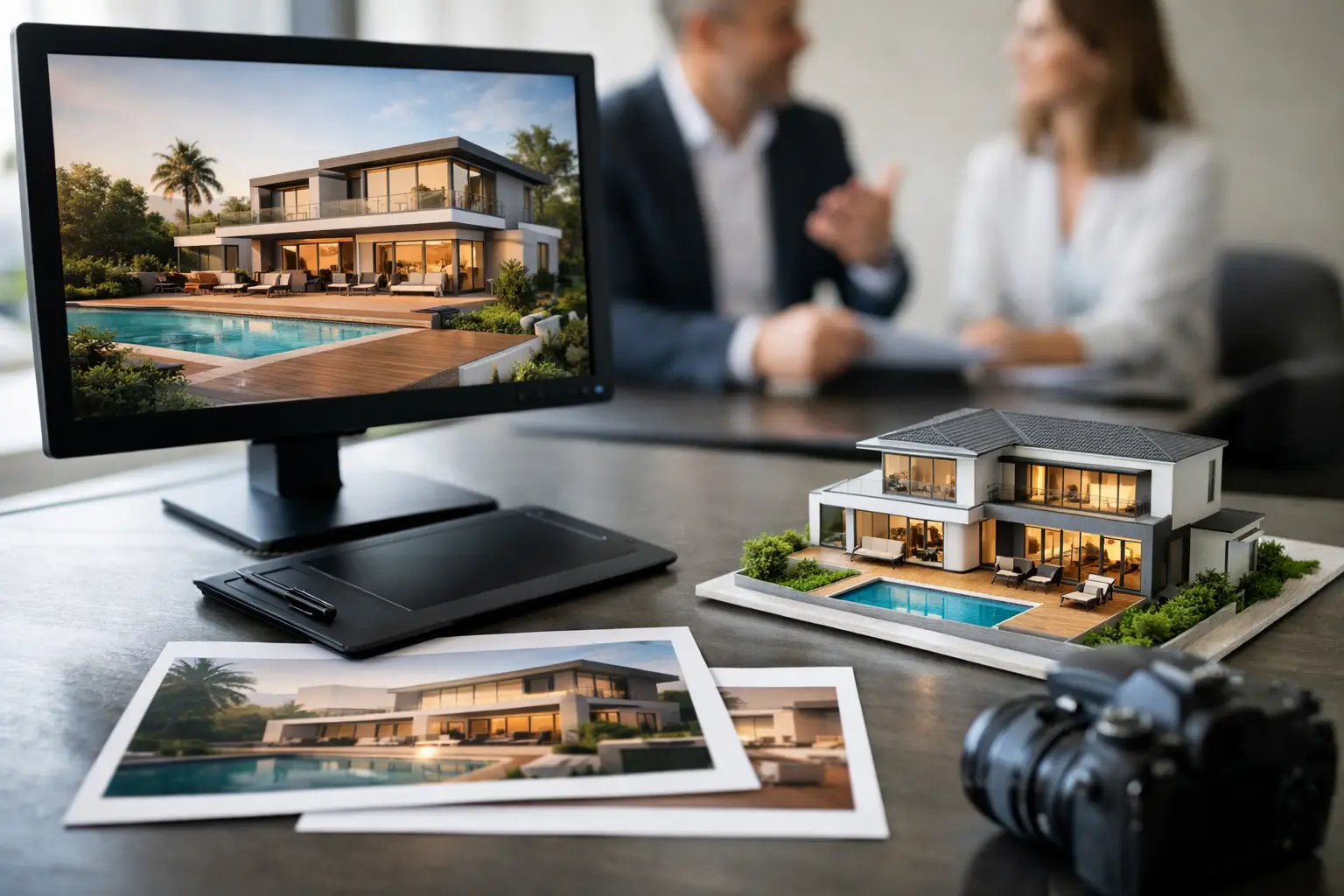
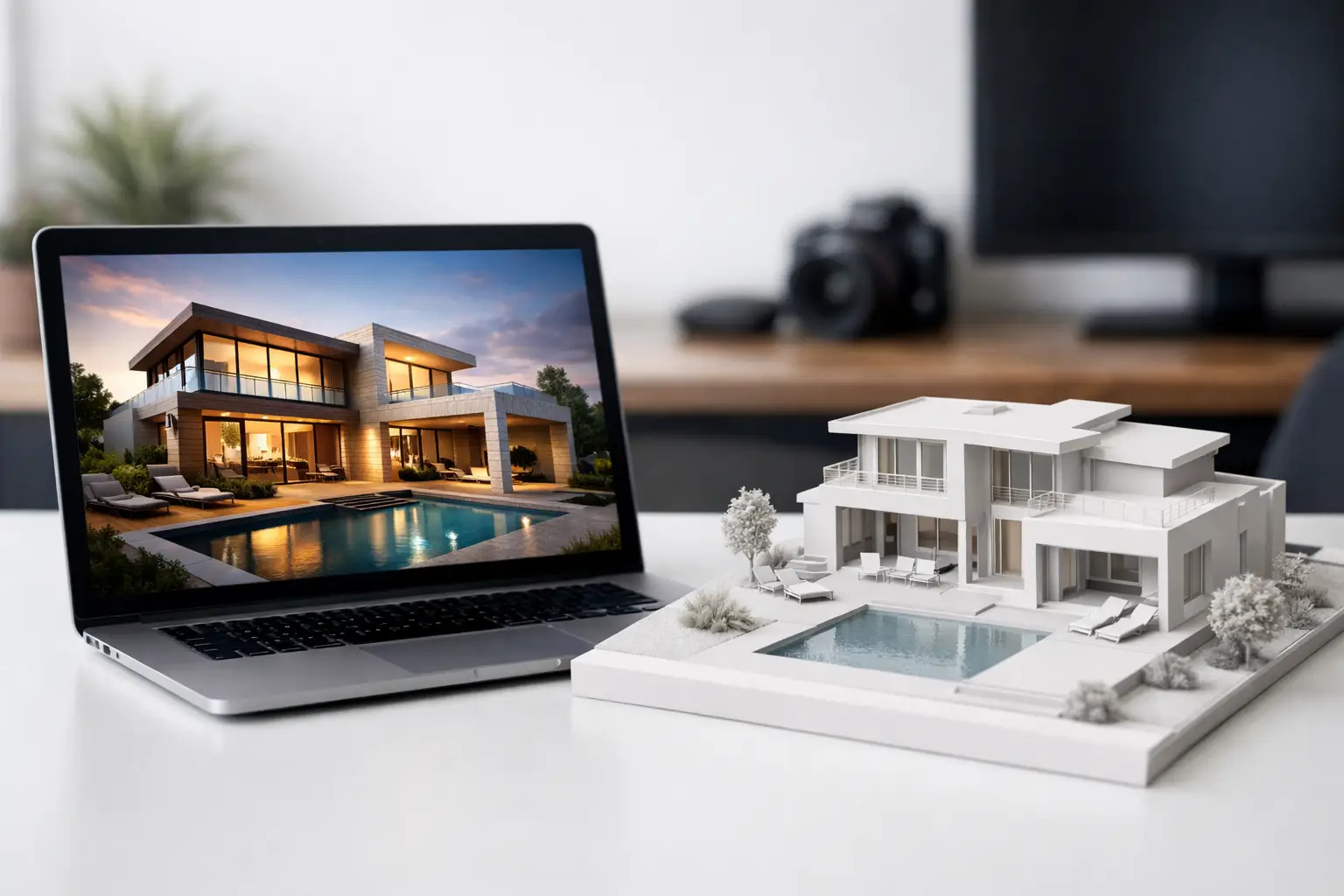
A 3D model is the digital construction of an object, interior or building. A CGI render is the finished visual produced from that model, using selected materials, lighting, camera angles and post-production. One is the working asset; the other is the image your audience sees.
CGI Render Versus 3D Model: The Core Difference
Think of the 3D model as the carefully built set, and the CGI render as the professionally photographed result. The model contains the geometry: walls, windows, furniture, rooflines, fixtures, landscaping and any other elements needed to represent the scheme in three dimensions. It is built to agreed dimensions and design information, whether that comes from CAD drawings, plans, elevations, schedules or a concept design.
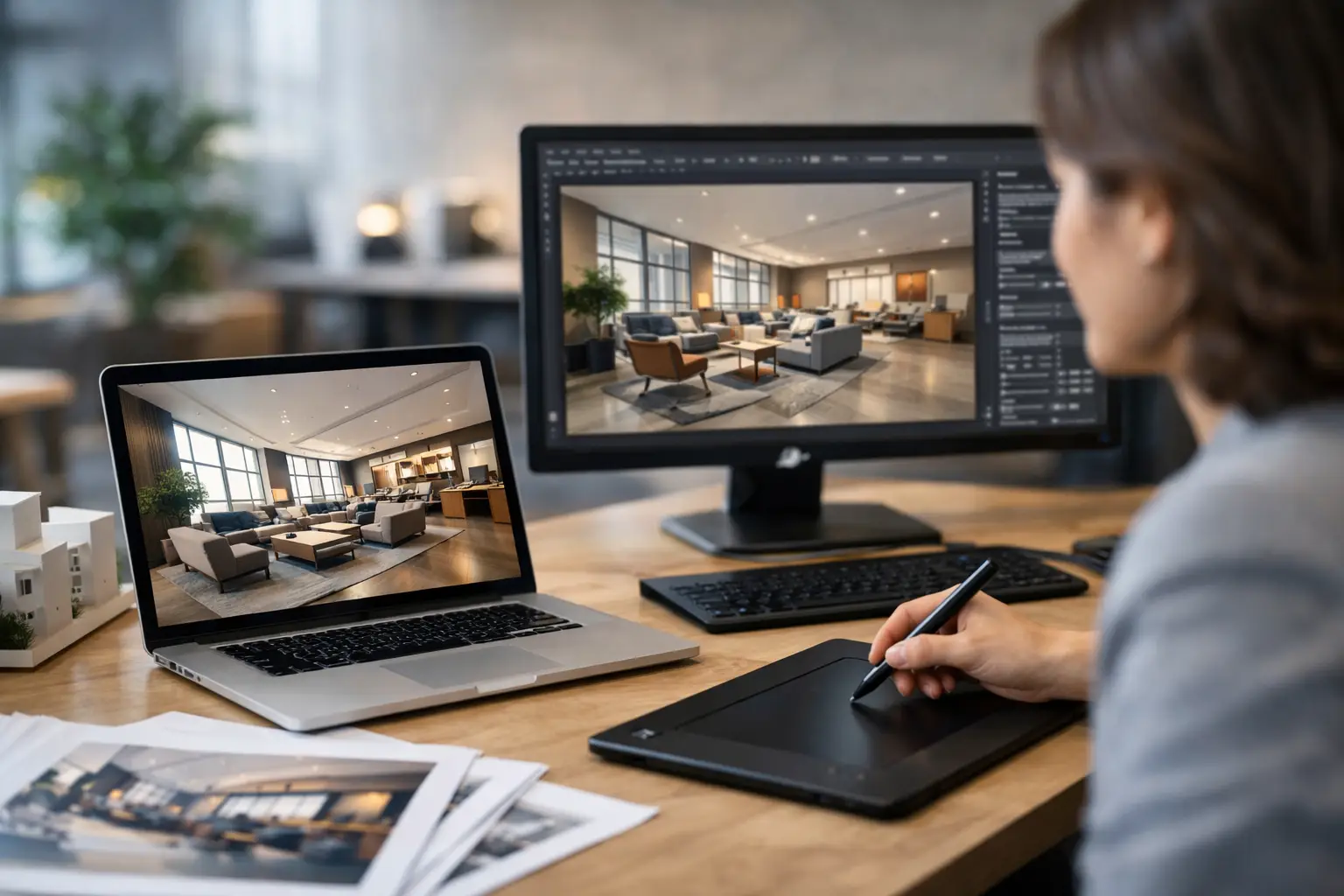
A render takes that digital structure and turns it into a finished image. The CGI artist sets a viewpoint, applies convincing finishes, creates daylight or artificial lighting, adds shadows, reflection and atmosphere, then refines the image in post-production. This is what makes an unbuilt flat feel warm and lived-in, or enables a housebuilder to show how a development will sit within its setting.
The distinction is practical. A client might own a detailed 3D model but still need a specialist visualisation studio to create saleable imagery from it. Equally, a client may commission a set of final CGI images without requiring the underlying model in a format they can reuse independently. The appropriate scope depends on how the asset will be used after approval.
What a 3D Model Is Designed to Do
A 3D model is primarily a spatial and technical asset. It allows a design to be viewed from different angles, tested against other elements and developed before it becomes a physical reality. For architects, developers and product teams, this can be valuable well before marketing imagery is required.
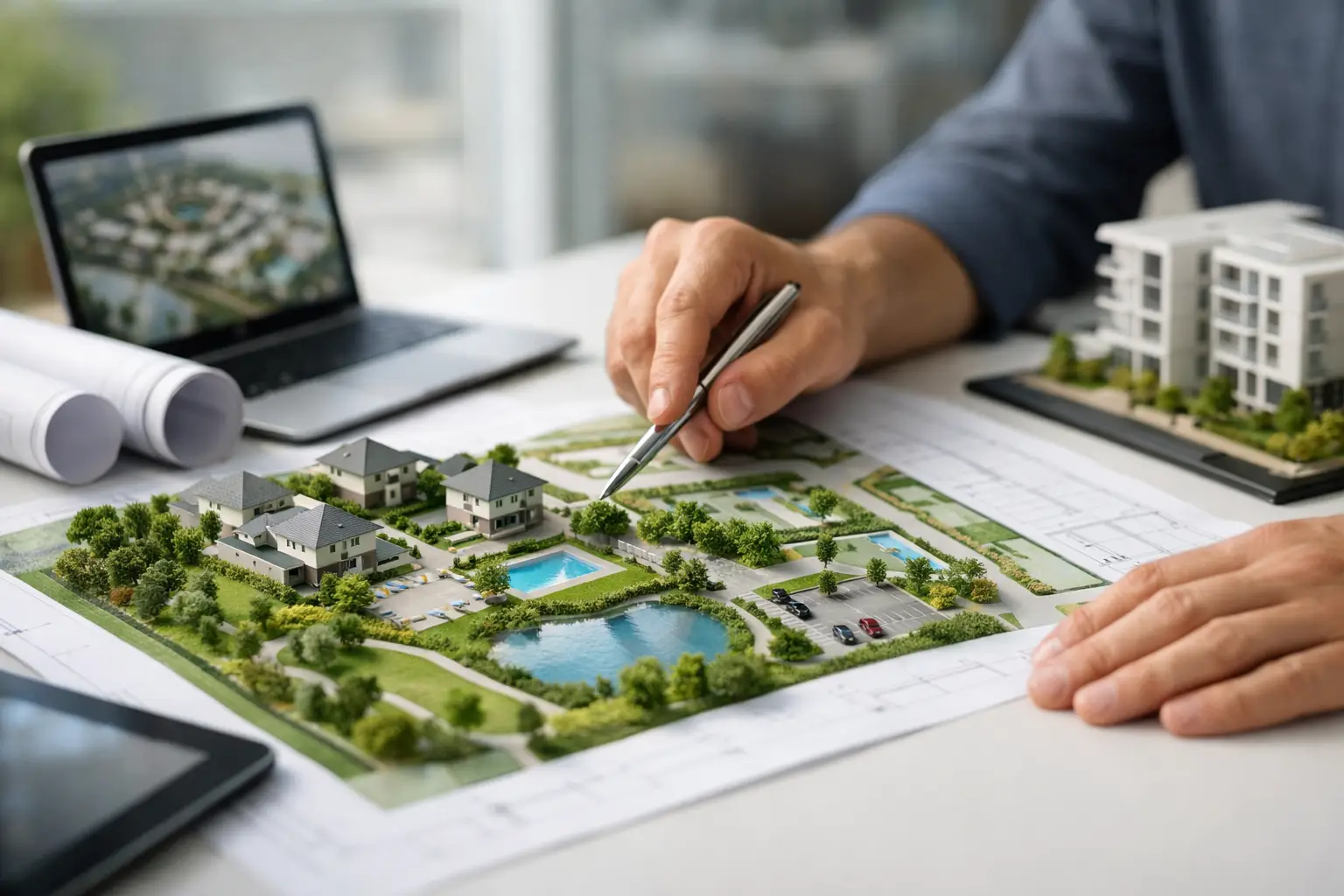
The level of detail is not fixed. A simple massing model might show the height, footprint and form of a proposed development, while a high-detail architectural model can include façade systems, joinery, sanitaryware, soft furnishings and planting. The required detail should always reflect the intended use. It is rarely cost-effective to model every concealed construction element when the brief is limited to a handful of exterior marketing visuals.
Models can also support several forms of output. Once created, a suitable model may be used for still CGI, animation, 360° interactive tours, virtual staging, floor plan visuals or additional viewpoints as the campaign develops. That potential reuse can make modelling a sound investment, particularly for phased developments or product ranges with a long marketing life.
However, a model is not automatically presentation-ready. Raw geometry can look flat, unfinished or misleading without considered materials, lighting and composition. A technically accurate digital building does not necessarily communicate aspiration, quality or place.
Accuracy depends on the source information
A 3D model is only as reliable as the information supplied and approved. Where plans are evolving, there needs to be a clear process for recording revisions and agreeing which drawing issue forms the basis of the visuals. This is especially important in property marketing, where a small change to a balcony, window position, kitchen layout or boundary treatment can become commercially significant.
For early-stage campaigns, artists can work from planning drawings or concept information, provided the imagery is clearly aligned with what is known at that point. As a project progresses, the model and renders can be updated to reflect confirmed specifications. The goal is not merely to make something attractive; it is to represent the intended scheme with care and consistency.
What Makes a CGI Render Effective
A CGI render is a communication tool. It answers the questions a buyer, investor, occupier or customer will ask quickly: What will this look like? How will it feel to use? What is distinctive about it? Can I picture myself here?
The most effective render begins with more than a technical model. It needs an understanding of the audience and the message. A city-centre residential scheme may need to emphasise light, amenity and contemporary living. A premium product visual may focus on finish, scale and tactile detail. A commercial development might need to show access, landscaping, signage and its relationship with the surrounding area.
Camera selection is central. An exterior view can make a building appear imposing, welcoming or well connected, depending on the viewpoint and lens. An interior image needs to show a room honestly while retaining a sense of space. Lighting creates time of day and mood, while styling gives an otherwise empty room a believable purpose. These choices are not decorative extras. They are how CGI becomes strategically effective marketing material.
Post-production then brings control and polish. It may involve refining the sky, balancing contrast, adding people or vehicles, improving planting, integrating a real site photograph or ensuring branded colour choices sit comfortably within the wider campaign. The final result should feel credible rather than overworked.
Photorealism is useful, but not the only objective
Photorealistic CGI is often the right choice for sales brochures, website launches, hoardings and investor presentations because it helps people understand an unbuilt proposition quickly. Yet realism must be paired with accuracy and purpose. Overly dramatic sunset light may be visually striking, but it may not serve a planning consultation or a technical stakeholder presentation.
There are occasions when a cleaner, more illustrative style is preferable, particularly for early concepts or masterplans where key information matters more than lifestyle detail. The right visual treatment depends on the decision the image needs to support.
Which Deliverable Should You Request?
If your immediate need is a fixed set of brochure images, a CGI render package may be sufficient. The studio will create the necessary model as part of the production process, but the agreed deliverables will be the final high-resolution images in the formats required for print and digital use.
If you anticipate regular design changes, multiple phases, an animation, a virtual tour or a wider set of future marketing assets, ask whether the 3D model can be structured for ongoing use. This does not always mean you need every source file handed over. It means the scope should account for future adaptability from the outset.
It is also worth clarifying what is included before production begins. A useful brief identifies the required views, target audience, intended media, level of styling, key design features, available drawings and approval process. It should also establish how many rounds of amendments are allowed and what happens when the architectural design changes after modelling has started.
For a straightforward campaign, the shortest route is often to agree the final render views early and focus the work there. For a long-term development, a more considered modelling strategy may reduce repeat work later. Neither approach is inherently better. The commercial value lies in matching the production method to the life of the project.
Why One Studio Approach Improves Consistency
CGI rarely works in isolation. A finished image may need to sit within a brochure, a sales deck, a site plan, social media assets, a branded presentation or point of sale material. When different suppliers interpret the scheme separately, visual inconsistency can creep in through colour, tone, messaging and even basic design details.
Bringing CGI visualisation and graphic design together creates a clearer route from initial concept to campaign delivery. The same team can consider how renders will crop on a brochure spread, how they will work beside floor plans, and how the wider brand identity should shape the finished materials. It also makes project management more direct when deadlines are tight and several outputs need to be approved together.
At TDR Creative, that combined approach helps clients turn technical design information into polished, commercially focused visual communication. The priority is not simply to produce an attractive picture, but to create assets that work hard across the places your audience will encounter them.
The Better Question to Ask
Rather than asking whether you need a CGI render or a 3D model, ask what the visual must achieve, how long it needs to work for and what else it may need to support. A strong model provides flexibility. A strong render provides persuasion. When both are planned around the campaign rather than treated as separate technical tasks, the result is more accurate, more consistent and far more useful to the people making decisions about your project.
The best time to make that decision is before the first view is modelled, when a clear brief can protect quality, budget and the impact of every final image.