Home » How Product CGI Reduces Photography Costs
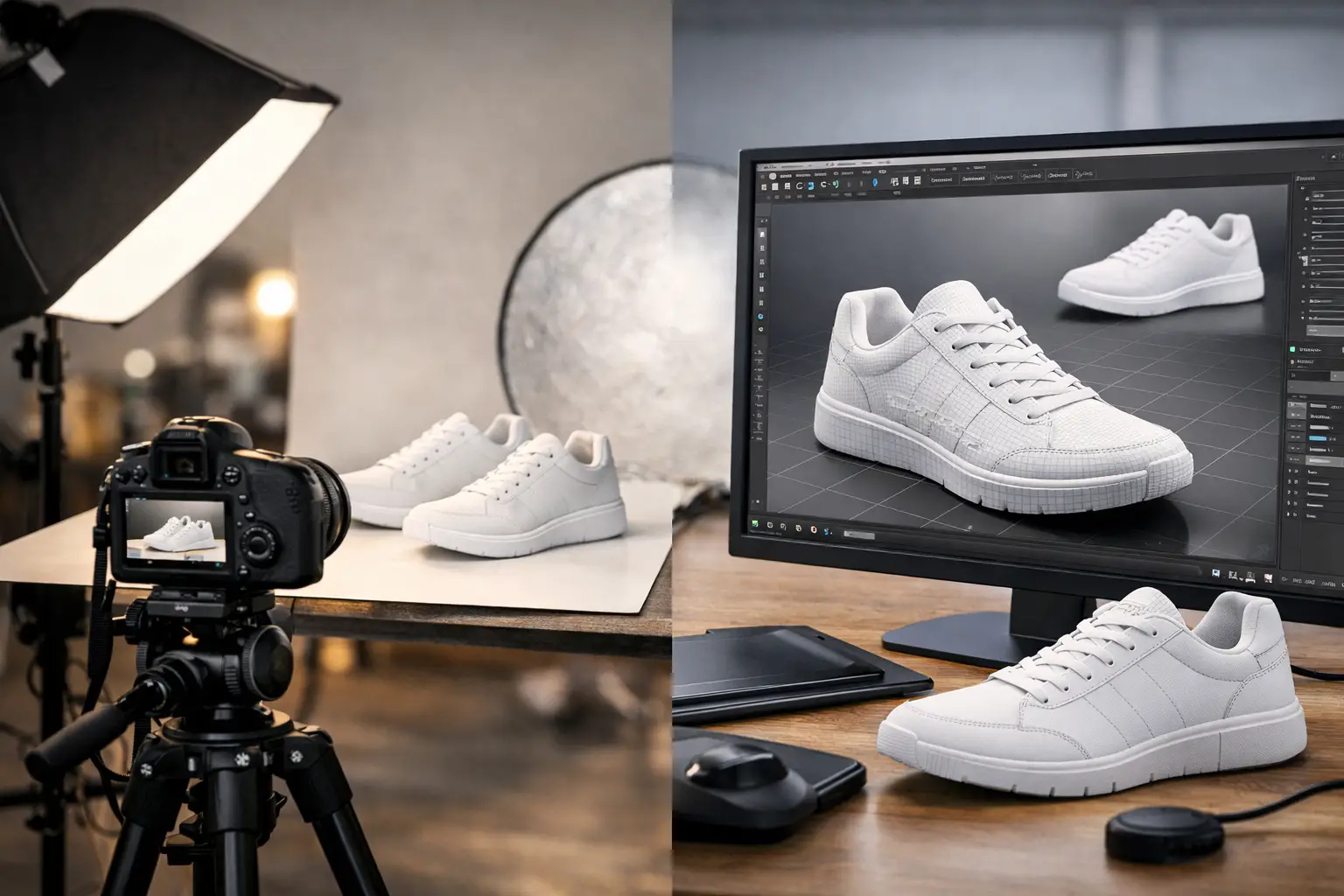
How Product CGI Reduces Photography Costs
A product launch can quickly become expensive before the photographer has taken a single image. Prototypes need finishing, samples must be couriered, sets need building, and every late packaging amendment can trigger a costly reshoot. Understanding how product CGI reduces photography costs helps marketing teams make better decisions about where photography is essential and where a digital visual will deliver more value.
For consumer brands, retailers, manufacturers and property-led businesses, the benefit is not simply replacing a camera with software. Product CGI creates a controlled, reusable visual asset that can be adapted for campaigns, catalogues, packaging, point of sale and digital channels without rebuilding a set or recalling a product from distribution.
The cost behind a conventional product shoot
Traditional product photography remains valuable, particularly where texture, human interaction or editorial spontaneity are central to the brief. Yet its production costs are often broader than the day rate for a photographer and studio.
A typical shoot may involve product samples, props, set construction, lighting equipment, stylists, art direction, retouching, transport and location fees. If a campaign requires several colourways, sizes or product configurations, those costs can rise quickly. The same applies when products are large, fragile, not yet manufactured or difficult to transport.
Timing creates another pressure. Marketing often needs imagery while product development is still moving. A new finish, label, component or pack design may be approved after the shoot has taken place. Even a small change can make a completed image commercially unusable, leaving teams to choose between accepting an inaccurate visual or paying for another production day.
CGI does not remove the need for planning or creative direction. It does, however, shift more of the investment into a detailed digital model that can continue working long after the initial campaign has gone live.
How product CGI reduces photography costs across a campaign
The strongest savings usually come from avoiding repeat production rather than from one individual line item. Once a product has been accurately modelled, textured and lit, it can be shown from new angles, in different finishes and within multiple settings without repeating the entire physical shoot.
Fewer samples and prototypes
Physical samples are not always readily available in the volume or condition needed for marketing. Early prototypes may be incomplete, hand-finished or unsuitable for close-up photography. They may also need to remain with engineering, quality control or retail teams.
Product CGI can be created from technical drawings, CAD data, product references and material specifications. This means campaign development can start before final stock arrives, helping brands prepare launch materials earlier and reduce reliance on multiple photographic samples. For products with many variants, that difference is substantial. One correctly built master model can form the basis for an entire range.
There is a trade-off: CGI is only as accurate as the information provided. If dimensions, finishes or branding are still uncertain, the project needs a clear approval process. Building time into the schedule for design sign-off protects both accuracy and budget.
No studio, set or location costs for every scene
A convincing product photograph may require a carefully constructed environment. A premium kitchen appliance might need a fitted kitchen, styled food and a specialist studio. Outdoor furniture may require a garden setting, favourable weather and a team prepared to manage changing light.
With CGI, environments can be designed around the product and campaign objective. The same item can appear on a clean studio background, in a lifestyle setting or as a detailed cutaway without the cost of hiring several locations or building multiple sets. Lighting can be refined with precision, keeping every image consistent across a product range.
This is especially useful for brands that need a high volume of assets. Rather than selecting one or two shots that justify the cost of a physical setup, teams can commission a considered suite of views for web, print, trade presentations and social content.
Changes do not automatically mean reshoots
Reshoots are one of the least predictable photography costs. They can be caused by an updated logo, changed finish, corrected product detail, revised campaign message or a simple request for another angle. The original crew, studio and props may no longer be available, and the new images may not match the earlier work perfectly.
A product CGI scene can be amended without recreating the complete production. A colourway can be changed, a graphic applied to packaging, a background adjusted or a camera angle repositioned while retaining the established visual style. This makes CGI particularly cost-effective for products with long development cycles or frequent seasonal updates.
Not every revision is free. Significant model changes, new environments and additional creative directions require further production time. The commercial advantage is that these changes are targeted and scoped, rather than requiring a fresh shoot with all the associated logistics.
Better use of every approved asset
A single product photo is often cropped, retouched and repurposed until it can do no more. By contrast, a CGI model can support a planned asset library. It can provide hero visuals, alternate viewpoints, close-up material details, exploded views, configurations and animated content from the same underlying build.
That flexibility reduces the need to commission separate visuals for each channel. It also improves brand consistency, because product proportions, finishes, lighting and composition can be controlled across the full campaign. For marketing teams managing catalogues, sales collateral and digital advertising at the same time, this consistency has practical value as well as visual value.
Where CGI delivers the clearest return
Product CGI is not automatically the lowest-cost route for every brief. For a simple, readily available item requiring one straightforward packshot, a well-managed photographic shoot may be quicker and more economical. The calculation changes when complexity, variation and future use are involved.
CGI tends to offer the strongest return for configurable products, furniture ranges, packaging concepts, technical equipment, kitchen and bathroom products, automotive components and high-value consumer goods. It is also effective when a product must be marketed before manufacture, or where physical access is limited.
The value increases further when a brand needs supporting creative work. A CGI visual can be planned alongside brochure layouts, point of sale materials, packaging artwork and presentation documents, rather than being handed between disconnected suppliers. This gives the campaign a more coherent finish and reduces duplicated briefing, artwork preparation and approval stages.
Planning a CGI project to protect the budget
Cost-effective CGI begins with a focused brief. The studio needs to understand where the images will appear, which product variants matter, what level of realism is required and which details must be exact. An e-commerce image, a large-format exhibition graphic and a close-up print advert may all require different levels of model detail.
It is sensible to agree the priority views before production starts. A hero angle can establish the lighting and visual language, then additional views can be developed efficiently from the approved direction. Brands should also provide the most current CAD files, dimensions, material references, packaging artwork and brand guidelines at the outset.
Approval stages matter. Agreeing a clay model or initial composition before fine materials and final rendering are applied prevents late changes from becoming expensive. The aim is not to limit creativity; it is to make sure creative decisions happen at the point where they have the greatest impact and the lowest cost.
Think in campaigns, not isolated images
The most effective brief asks what the product needs to achieve over its commercial life. Will it appear in a launch brochure, retailer presentation, website banner, paid campaign, product page and sales deck? Will new colours or accessories be introduced later? Could the model support animation or an interactive experience?
Answering these questions early allows the asset to be built with reuse in mind. It may require a slightly greater initial investment than one basic photograph, but it can avoid repeated spend as the campaign grows. That is the difference between buying an image and commissioning a flexible visual resource.
A more controlled route to premium product imagery
The commercial case for CGI is not that photography has become obsolete. It is that brands should not have to pay repeatedly for the same product every time a detail, format or campaign requirement changes. Photography and CGI can work well together, with each chosen for the job it does best.
For businesses that need photorealistic quality, dependable delivery and assets that travel across multiple channels, product CGI brings control to a process that can otherwise become costly and fragmented. TDR Creative blends technical CGI production with graphic design thinking, helping teams create visuals that are accurate, strategically effective and prepared for the wider campaign.
Before commissioning the next shoot, consider the lifetime value of the asset rather than the cost of the first image. If the product will need to work harder than one production day allows, CGI may be the more practical investment.
